Wait for Inspiration or Show Up Daily? The Truth About Creative Routines.
Picasso said it best: "Inspiration exists, but it has to find you working."
And in theory? I completely agree. Show up consistently, do the work, and inspiration will meet you there. It's advice echoed by countless successful creatives throughout history.
In practice though... well, I'm not exactly the poster child for following this advice. After 4 years of making a go at this creative life, I’m going to share with you how I get around the pitfalls of running my own schedule, and how you can too, whether you work for yourself or have to work around your J-O-B to get creative time.
My Dream…That Didn't Quite Go As Planned
Here's my confession: I'm a Type A first-born, daughter of an Indiana farming family. I like to get things DONE. Check the boxes, cross off the list, see tangible progress at the end of every day.
And after 20 years in optometry and vision rehabilitation, I finally achieved my dream: a fully autonomous schedule. I could do what I wanted, when I wanted! No more clinic hours, no more patient appointments dictating my day. Just me, my studio, and unlimited creative time.
I thought this would mean being super productive every day. Making ALL the things, finishing projects, checking those satisfying boxes.
It turns out creativity doesn't work like that.
Creativity is less like following a step-by-step checklist and more like trying to efficiently find a bunch of needles in a bunch of different haystacks.
Some days you find three needles in ten minutes. Other days you spend hours digging through hay and come up empty-handed. And at the end of those empty days, you're left with that sinking feeling: "What did I actually DO today?"
It can be incredibly frustrating.
Which is exactly why we need a system to follow. Not a rigid, soul-crushing schedule that turns your passion into drudgery – but a framework that gives you structure AND the flexibility to work with your creative process instead of against it.

Creative progress can feel like looking for a needle in a haystack.
When you don’t know where to start, start with a system.
The Two-Week Pivot Panic
Let's talk about what happens when you have a dream, but you DON'T have a system.
You start a new project. You're excited, energized, full of vision. The first week feels amazing – you're exploring, experimenting, making progress!
Then about two weeks in, it gets real. The initial excitement fades. The actual work settles in - but the results you’ve dreamed of are a long way off. And suddenly those doubts creep in: "Am I even on the right path? Maybe I should pivot to something else. Maybe I need more training first. Maybe I should explore that other idea that just popped into my head..."
Sound familiar?
This is where most creative projects die. Not because they weren't good ideas, not because you weren't talented enough – but because you didn't have a way to track whether you were actually making progress or just spinning your wheels.
The Magic Bullet: Put Numbers to Your Creative Work
I know it might feel odd to put numbers to a creative project. Art is supposed to be about feeling, about expression, about intuition, right?
And yet – data tracking is the magic bullet that stops those doubts and distractions in their tracks.
I use the 12-week year method: set data-driven goals every 12 weeks and track them consistently. Not vague aspirations like "work on my ceramics more" but concrete, measurable targets: "Throw 40 pieces this quarter." "Complete 12 finished works with underglazing." "Spend 6 hours per week in the studio."
When you're two weeks into a project and the panic hits, you don't have to rely on your feelings (which are probably lying to you anyway). You can look at your data. You can see that yes, you've thrown 15 pieces. Yes, you've logged 12 studio hours. Yes, you're making progress even if it doesn't FEEL like it.
The numbers don't lie. Your doubt-filled brain at 2pm on a Tuesday? That one's definitely lying.
Finding Your Rhythm (Not Someone Else's)
So how do you actually uncover the rhythm that's right for you? The one that's structured enough to build momentum but flexible enough that you're flowing with the river instead of either fighting your way upstream or clinging to a rock for dear life?
Start by knowing yourself – the REAL you.
Not the person you think you should be. Not the idealized version of an artist who gets up at 5am to paint in perfect morning light. The actual human you are, with your actual energy patterns and actual life constraints.
Do you have your best creative energy in the morning? Or are you a night owl whose brain doesn't even turn on until noon? Do you need long, uninterrupted chunks of time, or do you work better with shorter bursts?
Are you juggling a day job? Then maybe early mornings or evenings are your creative slots.
Do you have more flexibility in your schedule? Then you might designate some days as open "catch up" days for admin and life stuff, while others are sacred 2-hour chunks of creative time that you protect like a doctor's appointment.
The key is designing YOUR schedule, not adopting someone else's.
I used to try to do all five weekday mornings in my studio. But I just couldn’t stick with it and still live the way I wanted to, support my family, and keep home projects going. I now take Mondays and go all in throwing on the wheel. Just that action alone creates a flow where I start my week in creative mode, and then naturally finish up those pieces throughout the week. But some weeks, life happens and I shift things around. Like tomorrow, when the studio is closed for our big snow storm! The structure is there, but it bends when it needs to. With it being the last week of the month, I’ll focus on tying up loose ends and planning for February - and just lean into the snow day. Sketching and planning by the fire sounds like a decent Monday to me!

My mom says…
Plan your work, then work your plan!
The Long View Changes Everything
Here's what really makes this work: tracking your progress over time with a zoomed-out view that mitigates that end-of-day "what did I even DO today" feeling.
This is where quarterly reviews become essential. Every 12 weeks, you sit down and look at your data. Not your feelings, not your impressions – your actual numbers.
How many pieces did you make? How many hours did you spend in creative practice? What techniques did you try? What finished works came out of all that time in the studio? Start by making a list of key numbers that move the needle for you and your goals. Sales, subscribers, pieces submitted to shows, art fair events scheduled, pieces completed. Be clear on the criteria for each thing you track. And start small, with the most meaningful data points. I have a very specific income goal in mind, personally. So I’ll be tracking sales and expenses of course, but here’s the magic of thinking about this a little more intently. What do I REALLY want out of my art practice and career? I want to get really, really skilled and master the art of ceramics, to the point where I can make anything I want and really put my stamp on the world through my creative work. So I need to put in the reps. So my MOST important tracking this year is not sales. It’s completed pieces! And that focuses my days. I can thinking through a million ways to sell my work or make a living from my art. But none of it matters unless I’m making a lot of work, and strategically improving.
When you zoom out to this longer view, you see patterns you'd never notice day-to-day. You see that even though you felt unproductive for three weeks straight, you actually completed eight pieces. You see that your productivity spikes on Thursdays. You notice that you avoid certain techniques when you're stressed.
This information is gold. It tells you what's working, what's not, and what to adjust for the next 12 weeks.
And more importantly, it proves to you that you ARE making progress, even when the daily view feels messy and uncertain.
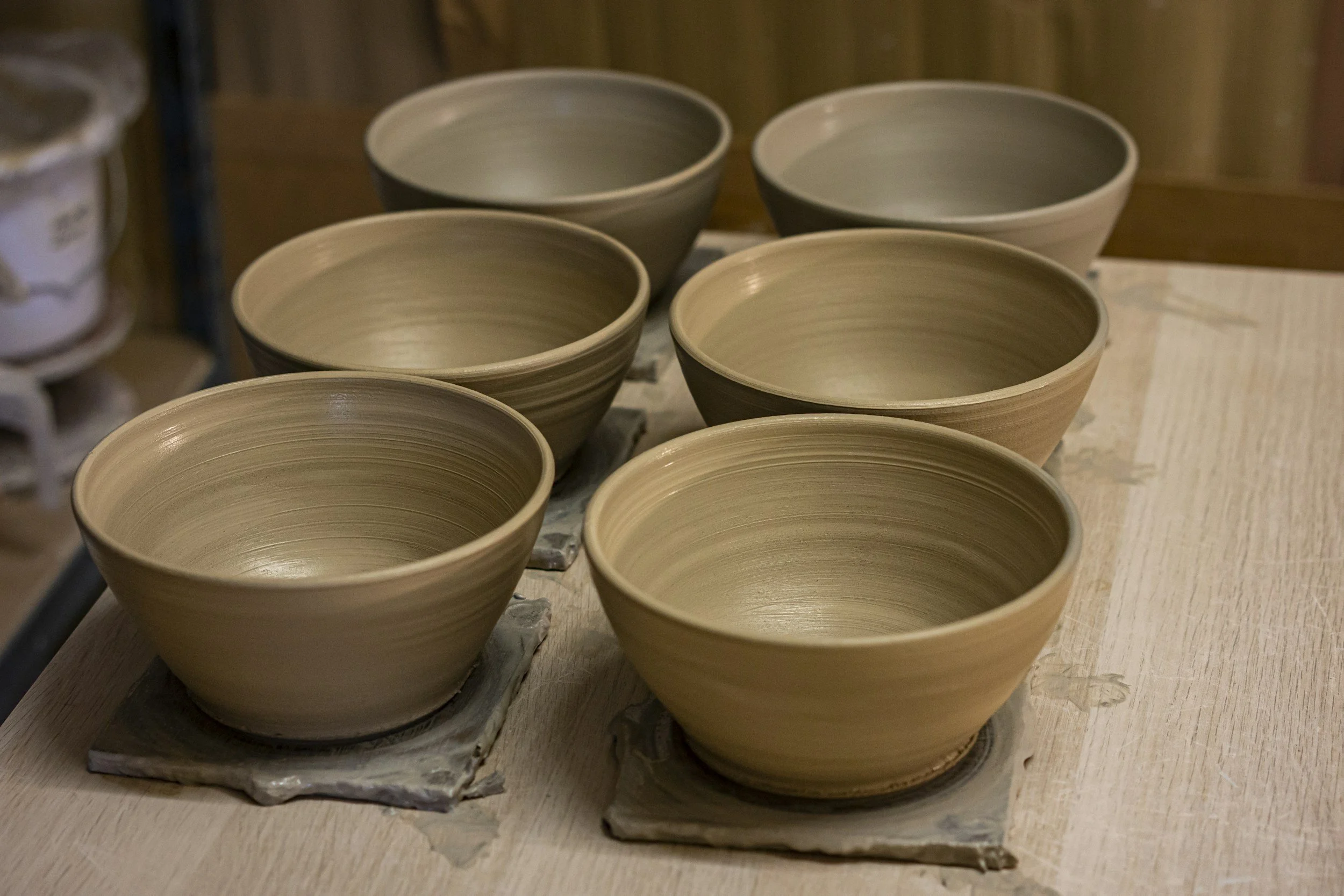
Tracking your key data is the key!
Instead of stressing about every step, just track that one key step that starts the domino effect towards your goal.
What Your Brain Is Actually Doing
Let me get into the neuroscience for just a minute, because understanding this makes everything click.
When you show up consistently to your creative practice – even when you don't feel inspired – you're building and strengthening neural pathways. You're teaching your brain, "This is something we do now. This is important."
Over time, that consistency makes creativity MORE accessible, not less. The activation energy required to start creating goes down. The flow state becomes easier to access. Your skills improve because you're giving your brain repeated opportunities to learn and refine.
But you also need flexibility because your brain doesn't work well under constant rigid stress. It needs variety, it needs rest, it needs the freedom to make unexpected connections.
This is why the perfect system is structured flexibility – enough consistency to build those neural pathways, enough breathing room to let your creative mind actually create.
Your Next Step
Here's what I want you to try:
Quick Win: Pick ONE measurable goal for the next week. Not "be more creative" but "spend 3 hours in the studio" or "complete 2 sketches" or "throw 5 bowls." Write it down. Track it. See if you hit it. That’s it! Start there.
Solid Solution:
Map out your actual creative rhythm for the next 12 weeks. Look at your real schedule, your real energy patterns, your real life constraints. Block out specific chunks of time – maybe some days are 2-hour creative blocks, maybe some are catch-up days. Put them in your calendar and commit to tracking your hours and output. Then download the Artist Quarterly Review Workbook and schedule your first review session 12 weeks from now. This one act – committing to the long view – might be the thing that finally breaks you out of the chasing your tail feeling.
Treat Yourself:
If you're anything like me and get a little too excited about self-improvement and productivity books, hop on Amazon and order "The 12 Week Year" by Brian Moran. This book completely changed how I think about goal-setting and progress tracking. Instead of getting lost in vague year-long goals that feel forever away, it breaks everything down into 12-week sprints that actually feel manageable. The quarterly structure keeps you focused enough to make real progress without the burnout of trying to sustain intensity for 12 months straight. Plus, there's something deeply satisfying about having a clearly defined finish line every three months.
You don't have to choose between rigid discipline and flowing with inspiration. You get to design a system that works with how you actually operate – structured enough to build momentum, flexible enough to breathe, and measured enough to prove you're making progress even when it doesn't feel like it.
Inspiration exists. But you've got to be working when it shows up.
What's your creative rhythm? Do you track your progress, or does it feel too rigid? Share in the comments – I'd love to hear what's working (or not working) for you!
With Enthusiasm for Life & Art,