The Art of Showing Up: How Creating in Community Changes Everything
I'm a certified introvert who always shuddered at the words "group project" in school and reveled in long days alone with my own ideas and work. Those solitary days are valuable - we all need different amounts of solitude. But before we bury our heads too deep in the sand, let's look at what we gain from social creating. And it doesn't have to be one of those annoying group projects to provide the benefits.
Let's face it: creative isolation feels safe. No judgment, no explaining yourself, no navigating other people's opinions or energy. Just you and your work. But that safety costs you. You get stuck in your own echo chamber, recycling the same ideas and losing touch with what makes YOUR voice unique. Regular social creating gives you fresh perspective, unexpected techniques, and reminds you why you started making in the first place.
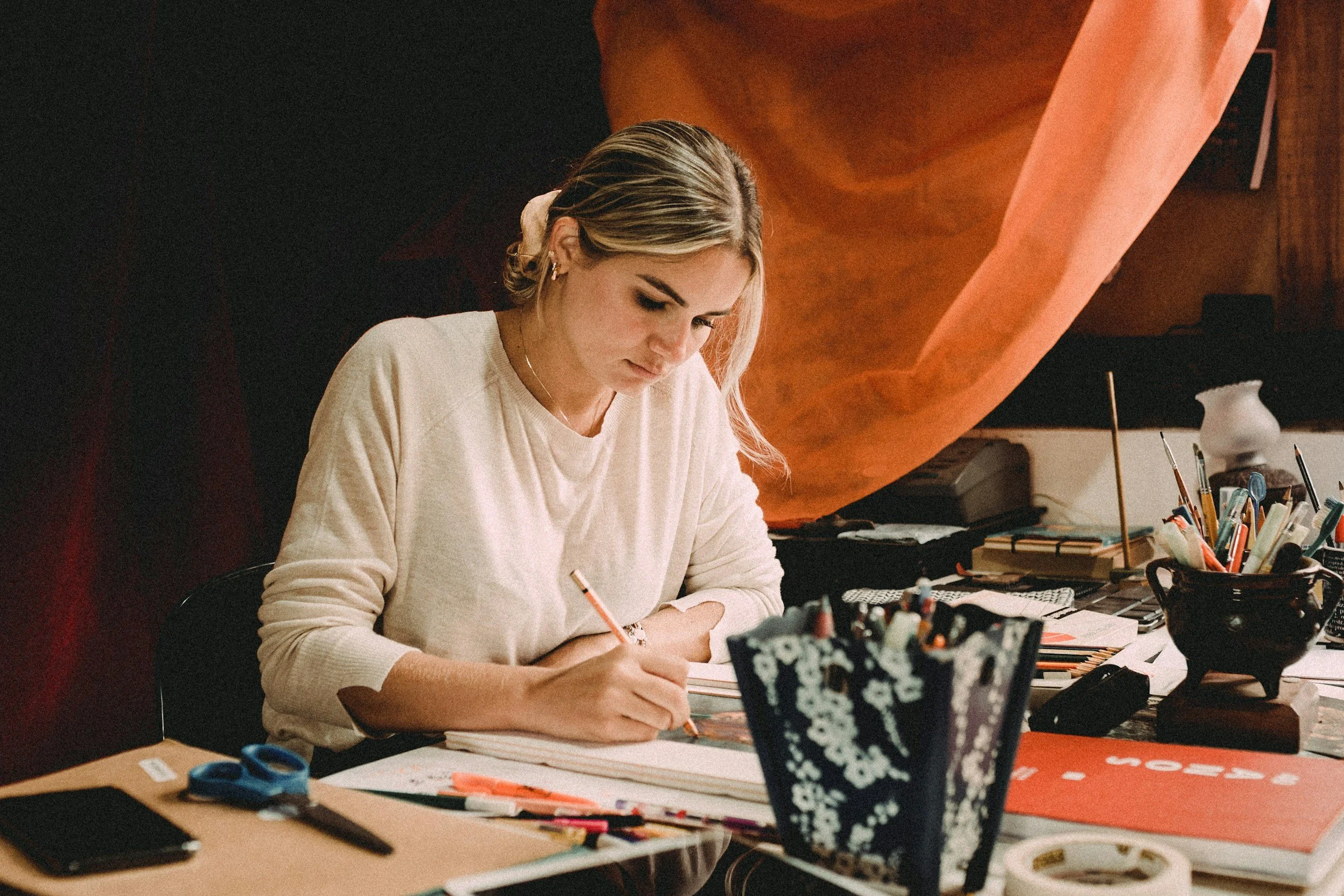
At first, quiet is welcome in our noisy world. Even healthy.
But there is a point where being alone can turn on you.
The Hidden Cost of Creative Solitude
I'll start by saying this: I get it. I mean I REALLY get it. As an introvert, I NEED sessions of solitude to create deeply. My best porcelain work happens when I'm alone in the studio, completely absorbed in delicate underglaze drawing, or mesmerized in the trance of throwing with no one interrupting me. But somewhere along the way, I discovered something unsettling - isolation doesn't just protect your creative space. It stagnates it. Slows you down. Stunts your growth.
For starters, think about this: Who even am I if I'm not bouncing off other humans? Your style emerges in contrast to others. There are things about you that you're so accustomed to that you don't even see them. To you, your style might be just putting shapes on a page, but others are amazed by your perspective and the creative decisions you make without even realizing it. We all bring our whole life's experience to each interaction and especially to each act of creation. Having the gentle feedback of others gives surprising clarity and helps us hone and celebrate our style.
And here's where it can get dark - there are real consequences to being alone too much. Boredom for sure, but also actual danger. When you're not saying things out loud, thoughts and beliefs can spiral into something you don't recognize. Depression and anxiety can take hold as our brains feed only on internal thoughts instead of interacting with the real physical world and those around us.
The science backs this up in startling ways. Penn Medicine's Dr. Mathias Basner completed a study of researchers in Antarctica - talk about isolation! They observed that brain cell volume in certain areas was lower immediately after the long Antarctic winter compared to scans taken before. The good news? Most changes were reversible six months after returning to civilization. Even better: quality sleep during isolation protected against brain volume loss.
Researchers at Caltech found something even more specific - a neuropeptide called Tac2 builds up in the brain during social isolation, potentially affecting mental health through increased fear, and hypersensitivity to perceived threats. And get this: these effects reverse with socialization. Your brain literally changes when you're isolated, and it changes back when you reconnect.
So what does this mean for us as artists? We're missing out on casual learning moments - how someone trims the foot of their pot, uses a particular glaze technique, or solves a structural problem you've been wrestling with for weeks. Being with others creates unplanned creative moments. Spontaneous discovery where your brain takes in stimuli - other artists working, different techniques, sights, ideas, conversations - and sparks connections that never would have happened in the controlled environment at home.
And the big one: There is creative validation and permission-giving that happens naturally in groups. Sometimes we need a nudge out of our limiting beliefs - our internal wiring that we are not even aware of. Over the years, we go through life and make up little rules to keep us safe. But sometimes those rules no longer apply - we've outgrown them - yet we keep accumulating more little rules, and our lives shrink instead of expand.
Often it's the person next to you at the clay table, casually asking, "Oh, why are you doing it that way?" As you explain, the conversation reveals that your little rules aren't actually true, and you CAN do it differently. In fact, that way may be easier and open doors for you. I used to steer clear of the extruder - a piece of equipment that pushes out a tube of clay - honestly just because I wasn't familiar with it. Once someone showed me how easy it was, I combined extruding and hand-pulling to create a faster way to form my handles. This open-minded creative thinking helps not just in our art, but in life - problem-solving is a daily skill that can be learned and reduces stress. Rather than avoid problems and shrink, we embrace challenges and grow.
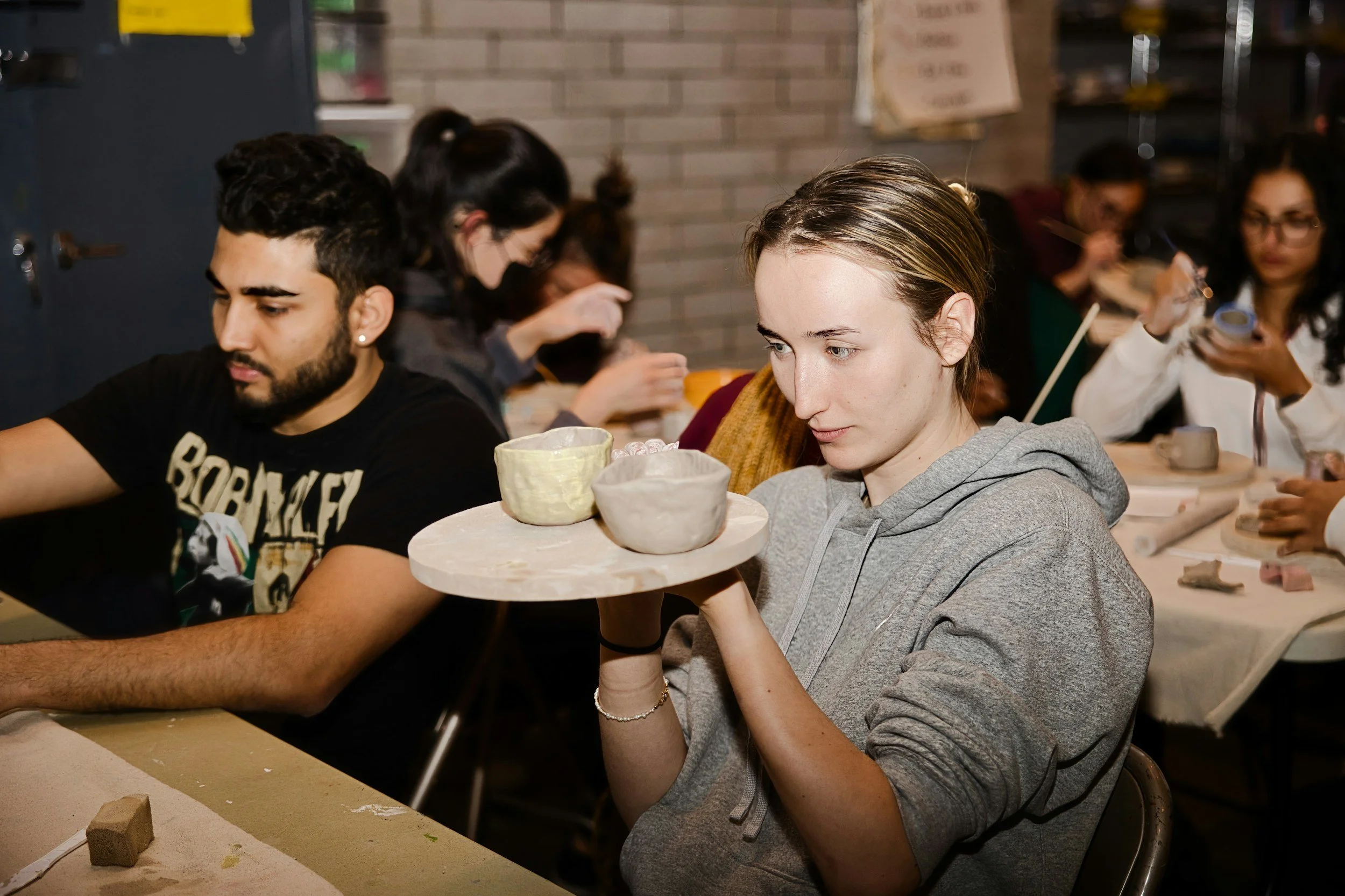
Even just working next to someone else can shift your perspective and be inspiring.
Three Ways to Find Your Creative Community (Starting Right Where You Are)
1. Start Small: The Community Studio Drop-In
The easiest entry point? Find a community art center that offers open studio time. Places like GoggleWorks here in Reading offer designated times when you can just show up, work on your projects, and be around other makers.
Here's the beautiful truth: you won't always "produce" in these sessions, but you'll always learn. Maybe you'll finish that piece you've been working on, or maybe you'll spend two hours chatting about underglazes and trying out someone else's favorite tool. Both outcomes are valuable. You have permission to just show up and be present. That's enough.
2. DIY Your Own Group
Don't have a community art center nearby? Start your own micro-community. Reach out to 2-3 friends or acquaintances who make things - they don't even need to work in the same medium. Set a regular time, and keep it gloriously low-pressure: come, make, chat, leave. No curriculum, no leader, no agenda beyond showing up.
The magic is in the consistency and casual nature. You're not committing to a semester-long class or formal critique session. You're just making space to create alongside other humans.
3. Test the Waters Online First
For my fellow introverts who need to warm up slowly, online communities are the perfect gateway to IRL connection. Start by joining spaces where you can lurk, learn, and gradually contribute when you feel ready.
I recommend places like The Ceramic School's online community, my own Facebook group (Heidi's Intro to Wheel Throwing Group - for Students and Beginners), or larger groups like "Everything Pottery - Beginner to Advanced." Watch how people share their work, ask questions, and support each other. Notice how virtual connections often lead to real-world meetups, collaborative projects, or at minimum, a sense that you're not alone in your creative journey.
What You Actually Gain (Beyond the Fear of Group Projects)
Let's talk about the laughter and tears bonus. For so long, I avoided asking questions, tried to live in my silo following the rules so no one could call me out or question me. Then I went back to creating art and realized how much better we are together, admitting imperfection, learning and growing. Permission to feel alive through creating in your own unique way, but together? That's everything.
Here's what surprised me: what you actually get done isn't about productivity metrics. Some open studio sessions, I barely finish glazing one piece. But I leave energized, inspired, with three new ideas I never would have discovered alone. Other times, I'm incredibly productive because everyone else's focus is contagious.
Then there's the contrast effect - how other people's work helps you see your own style more clearly. You think you're just making what everyone makes until you see how differently someone else approaches the exact same challenge. Suddenly you realize, oh, THAT'S what makes my work mine.
And yes, there's stealing like an artist - the ethical, beautiful kind that happens in creative spaces. Someone's color combination, another person's construction method, that thing they do with their extruder that changes your whole approach to handles. This isn't copying; it's cross-pollination. It's how creativity has always worked.
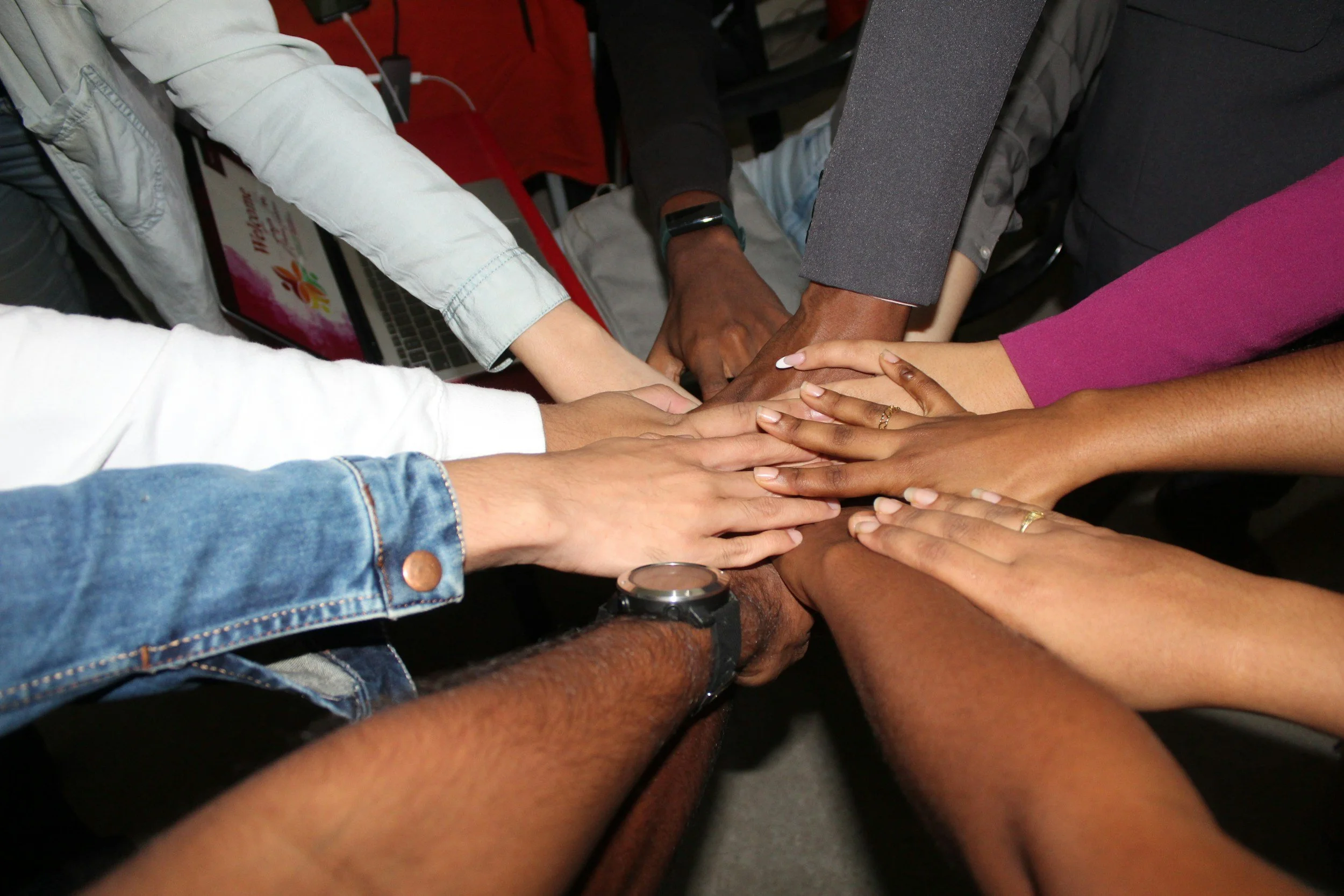
We are better together!
Introverts, extroverts, writers, thinkers, painters, potters…we all benefit from each other’s company and uniqueness!
The Bottom Line
Creative community isn't about networking or productivity - it's about remembering you're not alone in this weird, wonderful pursuit of making things with your hands and your heart. It's about keeping your brain healthy, your ideas fresh, and your spirit alive.
So here's your challenge:
Quick Win: Join one online creative community this week. Just one. Lurk if you need to.
Solid Solution: Meet up for coffee with a friend who is creative. Brainstorm ideas to set up your own creative club, bring sketchbooks and get a little low-stakes creative time in, or even just talk about the plans for your next art project.
Treat Yourself: Sign up for an in-person art class to grow your network of creative contacts. Your future self (and your brain's Tac2 levels) will thank you.
Which sounds right for right now? Or maybe you’ve thought of an even better idea for you? Keep me posted. Nothing is better than hearing from each other once in a while and feeling that spark of being seen and heard.
With Enthusiasm for Art & Life,