What Your Clutter Tells You About How You Make Decisions
My daughter always goes into a manic deep clean of her room the night before a big test. When she goes up to study, I prepare myself for the flurry of dishes and laundry that is about to flow out of her room. And it makes sense, right? We’ve all done that. On the surface, it looks like procrastination - but that’s not the whole story.
Take my writing session today for example. There’s a reason why I left my desk and came out to the tidy living room to write this blog. My desk is surrounded by pending tasks. Even when “neat,” which is not often, there are piles of papers to file, calendars of future events and tasks, partially completed craft projects, stamps and letters and sticky notes and birthday reminders.
It’s no wonder my brain goes off to try to mentally tie up all those loose ends. So, how do we solve this conundrum without spending an hour cleaning, then run out of time to write? And - might there be a deeper lesson to learn about how we make decisions…that could help in other areas of life? Investing a little time in understanding how we handle our stuff can help all of us learn more about how we handle our Stuff. And maybe even inspire us for growth in that area.
At the end I’ll be sure to send you off with a plan. And it won’t just be an order to go clean up your desk.
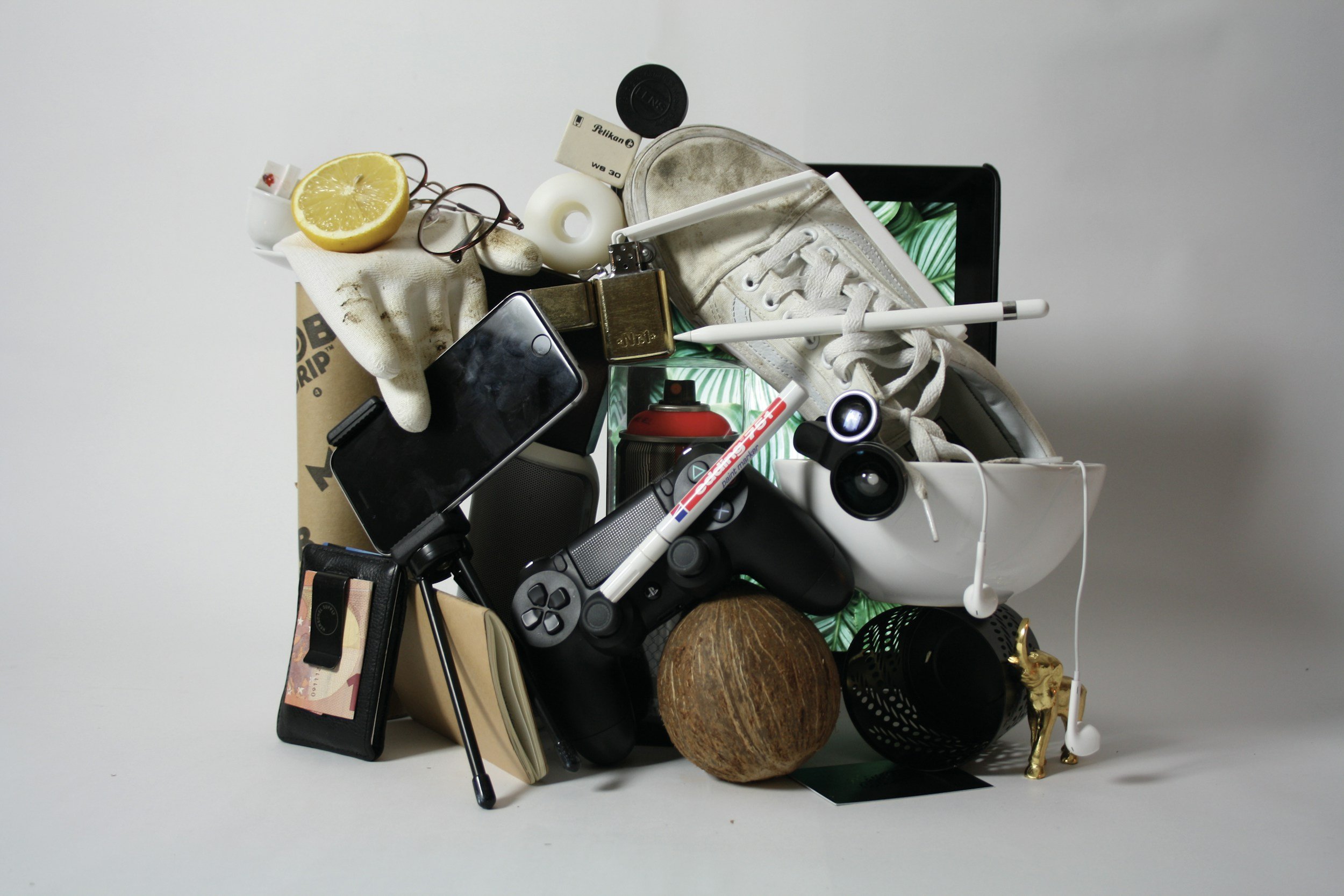
Look around the room -
Is your stuff making creative work more difficult?
What our brains actually do when processing visual clutter
Let’s start with how our brains take in visual clutter. You walk into your bedroom. There is a mountain of unfolded laundry of questionable cleanliness draped over a chair. Your eyes then bounce around the room at the four water glasses, full of varied amounts of water, ready for either a water glass orchestra or to protect you from evil spirits. A hairbrush on the floor, 3 socks crumpled up under the edge of the bed. The sheets are haphazardly tangled. Throw pillows are well, thrown on the floor and the chair. The dresser is coated in a layer of dust. And you forget why you even came in here.
Here’s what is happening: Your brain is constantly running an attention competition between everything in your visual field, with every object fighting for processing resources. Some of that sorting happens automatically and unconsciously, and this begins the moment you enter the room. Your brain goes straight to work. But if there’s too much - now your conscious, deciding brain has to get involved, actively working through all of the overflow.
In a study by Stephanie McMains and Sabine Kastner, published in the Journal of NeuroScience in 2011, findings revealed that the more your automatic brain has already sorted out the visual competition, the less work your conscious brain has to do. In other words, the more visual clutter in your environment, the more your conscious attention gets hijacked trying to manage it — leaving less available for the task at hand.
And we can’t get around this by “focusing harder.” Your brain doesn't ask your permission before it starts processing everything in the room. It's already working on that pile of stuff in the corner of your studio while you're trying to make something. You don't always feel it as a distraction — you might just feel vaguely depleted, or like you can't quite get into the work. Like you want to lay down. Have a snack. Scroll your feed.
How you do anything is how you do everything: Your physical clutter tells you about your mental clutter
Okay, that all makes sense. And sure, a marathon tidying session clears the space so you can get back into your work in the short term. But that’s not good enough for me, long term. I want to know, how do I KEEP things clear and peaceful, so I can get into deep work faster and easier, and with less whining?
The solution starts with taking a look at the facts. An accumulation of stuff means that at some point, you are delaying decisions. How did those papers pile up in the first place? Because I received that paper, looked at it, and deferred the decision to handle it. Sometimes this is necessary! But small changes in how you manage this physical clutter can help you shift the way you make decisions. What if instead, you waited to even look at the papers until a 15-minute dedicated evening session of “paper management”? Later, when your alarm goes off, you start the tea water, gather all the papers of the day, head to that cozy chair, and work through each task peacefully. Make it easy, make it quick, but make it happen. To me, this feels doable.
Making efficient decisions also requires clarity of what you value - you know what fits in your life and what doesn’t, for now. Going through those papers will take a lot longer if you’re not sure how you want to spend your time, which commitments you can handle, and what your schedule looks like next week. If you find yourself in that place, journaling through it as you clear the clutter can get you to the truth. Free write about any hesitations or tedious decisions on your mind, and see what comes up. Which things feel like an active part of this phase of life, and which don’t? What could you do about that? The solution doesn’t have to be a dumpster. Your solution could be taking photos of things, then donating, selling, recycling or storing and labeling them to appreciate later.
Decision-making is not the only skill under fire here - accumulating too much stuff can also mean you are anxious about moving forward, and afraid to let go of things that no longer serve you, a past role, a past way of life. There is value in honoring the past. Still, it is a fine line between honoring the past and clinging to the riverbank, never fully moving into the current of life in the here and now.
When I read out Marie Kondo’s book, The Life-Changing Magic of Tidying, I got rid of about 60-70% of my photos. I kept ALL my favorites, and I know right where they are. I cherish them now more than ever. I also got rid of all but 2 yearbooks, my senior year one and another favorite that friends had written in. I’ve never looked back, my shelves are lighter, and my favorites are more accessible. She emphasizes that you have to do it your way - but also that it’s a great concrete way to reflect on what you really will use and look for, versus what you just feel you “should” keep.
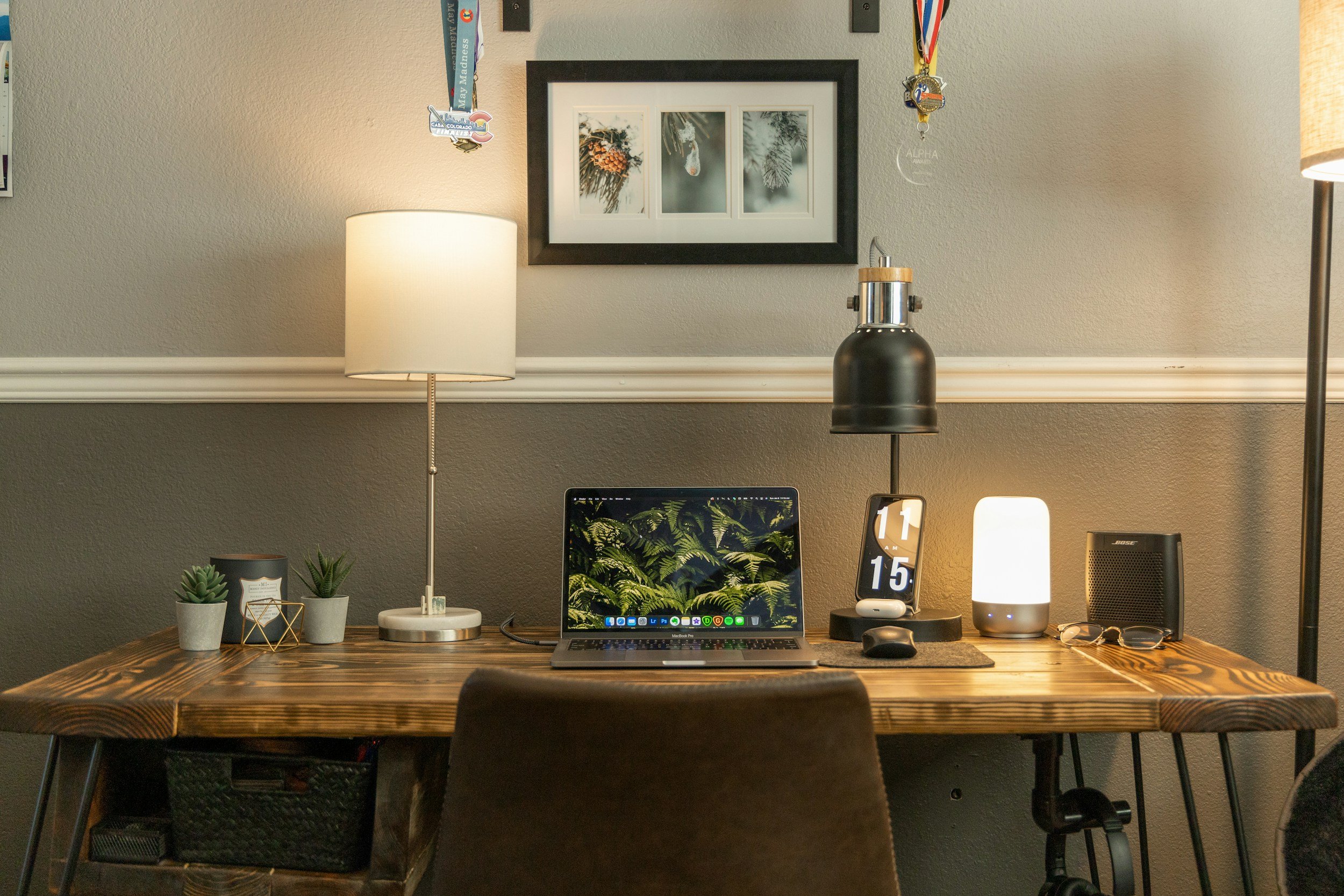
Your space can still be cozy, with meaningful mementos -
Intentionally choosing what you see (and what you don’t see) in your workspace helps your brain get into creative mode.
Moving From Clutter into Clarity
Here's the short version of all that science: order signals safety to your brain. When your space is clear, your prefrontal cortex — the part responsible for creative thinking — actually gets to do its job. A cluttered space keeps your cortisol elevated, which means your body is running a low-grade stress response in the background while you're trying to make things. So clearing your space isn't just tidying up. It's giving your brain permission to actually be creative.
In the short term, even just clearing one surface before you sit down to work can help you drop into the creative process faster and more fully. Try it and notice what happens. New ideas? Words flowing easier? No pressure, no magic. Just notice.
But if you find yourself in a chronic cycle of things piling up, it's worth getting curious about the bigger picture. Are you clear on what's actually important to you right now, and what isn't? Are you holding onto things — physical or otherwise — because letting go feels like losing something from your past? These aren't judgments, they're just honest questions worth sitting with. Journaling through them, bringing them up in therapy, or talking it out with a close friend can help you get clearer — not just about your stuff, but about your daily routines, your creative priorities, and where you want to go next.
Clear space and clear thinking are connected - and addressing one with improve the other, I’ve noticed. That’s one way to set the stage for creativity.
So Where Do You Start?
Set a timer for 30 minutes and free write about your workspace. What do you see? What thoughts or feelings come up as you look around? What annoys you most?
Then go to your problem area. Pick up one thing at a time, make a decision, and move on. Just 15 minutes. Then stop and notice — what shifted?
With Enthusiasm for Life & Art,