Silly Art Is Still Art — But With One Condition
How do you know if you're having too much fun and not taking your art seriously enough? Is silly art still art? The easy answer is yes. But the gold in this question is a bit more nuanced — and it's something I think about a lot in my own studio practice.
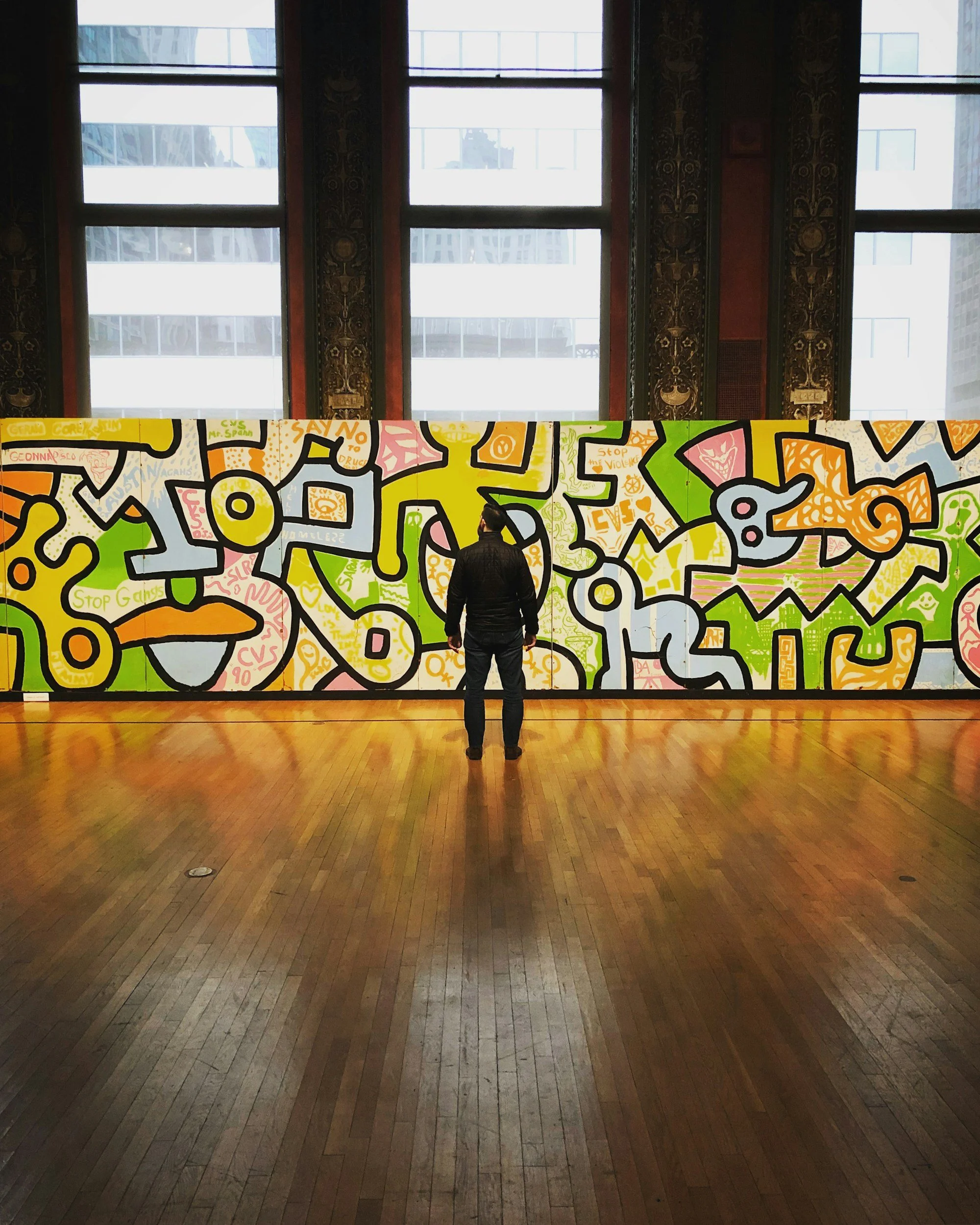
Simplicity, child-like silliness…
What is underneath the surface?
I am drawn to a certain level of freedom, playfulness, silliness — in art and in life. It wakes me up, makes me laugh. The freedom to exhale, to not cling so tightly to serious meaning and big stakes. That's a beautiful thing.
Reflecting on this, I realize it's really about the childlike sense of wonder and awe. The naivety of not knowing — not because you don't understand, but because you're five. You're not expected to know everything yet. You're just here to experience the world, directly. This joyful cluelessness paired with curiosity is best exemplified in 3–5 year olds. This is the age when my daughter began calling chicken wings "chicken on the cob," and when my son imagined that gravestones grew up from the ground after we buried our loved ones. That age is just magic, it’s peak human — they're building the whole world from scratch, and it's glorious.
The research backs this up. A NASA-commissioned study by researcher George Land found that 98% of children aged 3–5 score at genius level for divergent thinking — the open, imaginative, possibility-generating thought that fuels creativity. By age 25, that number drops to 2%. Oof. This stat hits me in the gut. We're not born without creativity. It gets trained out of us.
I want to protect that innocent freedom of thought, the world of make-believe, the type of silliness that brings on spontaneous cartwheels, giggles, and wide-eyed wonder. Picasso said it this way: "Every child is an artist. The problem is how to remain an artist once we grow up." Exactly.
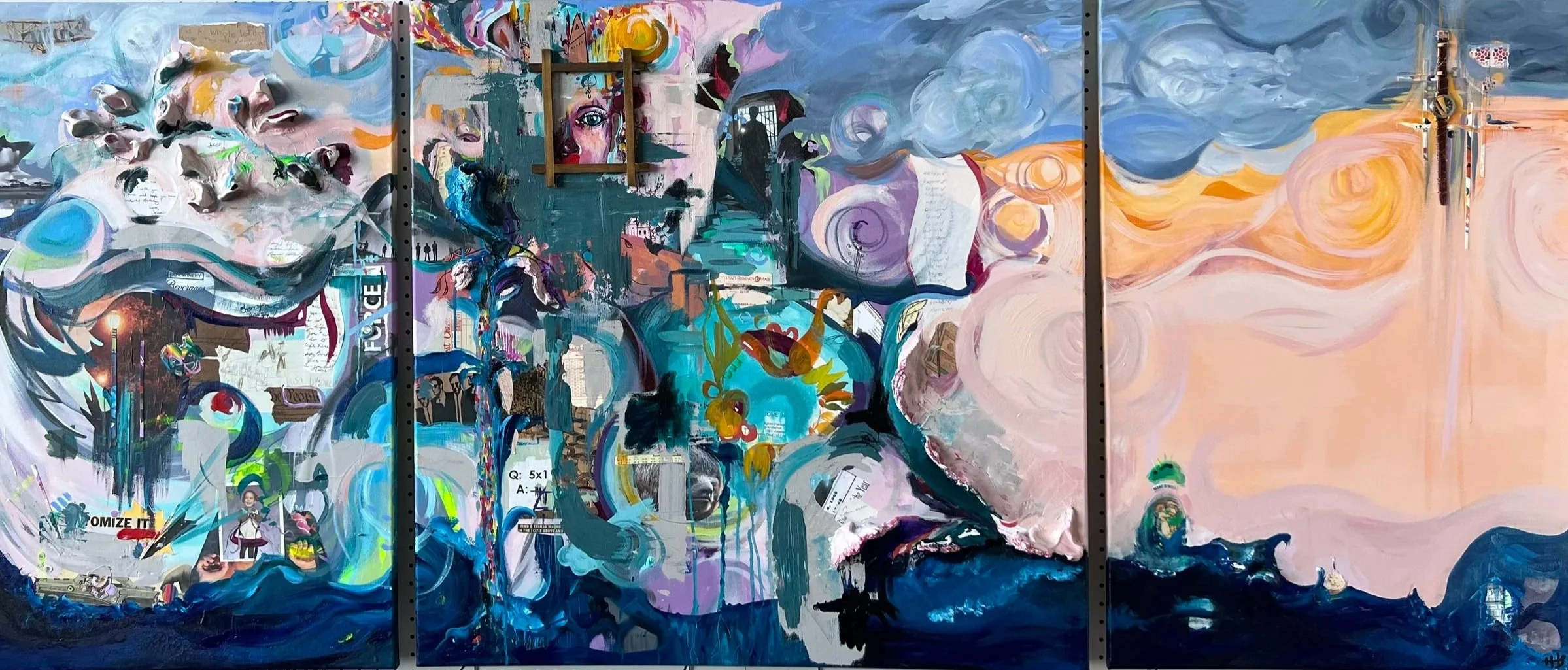
I've felt this tension in my own practice. I once took an art class where in one exercise, we made free marks to music. It felt forced, and my results were messy in a boring way — not the good kind of messy. But later, alone in my studio with the doors shut, I made a large triptych using collage, clay, paint, and found objects. My only intention was to reflect my own creative growth over time — kind of how I became me — using abstraction, scraps friends and family had sent me, and remnants from my childhood home. I wasn't making it for anyone but myself. People still walk into my studio and marvel at that piece. Some want it for their home. Some say it belongs in a gallery. The difference between the forced play and the real thing? I actually cared about the second one. It was me, on a canvas.
Rick Rubin said,
“The audience comes last. The first audience is you.”
There is a slight but important shift in silliness that can be — shall we say — annoying. It feels like too much, like making light of something important. That difference can be hard to detect from the outside. Two painters might create childlike, colorful, outside-the-lines pieces. And yet one can feel important — connecting with the audience, reminding them of themselves, bringing forth a perspective that helps us feel or learn something. The other may have a similar subject matter and yet feel haphazard, hollow. Careless. And THAT is the difference, to me. Does the artist care? Were these intentional choices, with a message, a viewpoint, a feeling to be evoked? There's an internal compass — the one that knows whether you're playing with the work or just away from it — and it makes all the difference.
This is why a seemingly simple piece in a museum can make someone say, "My 5-year-old could do that!" — while there's tremendous unspoken intention beneath the color choices, the composition, the history of the moment in which it was made. Take Keith Haring, who grew up right here in our corner of Pennsylvania. His work is bold, graphic, joyful — almost cartoonish. And he used that playful visual language to address some of the most serious topics of his time: AIDS, apartheid, racism. The silliness and the seriousness coexisted completely. That's what intention does.
Here's where I land: you can absolutely be silly. But you can't not care. Maybe silliness, lightness, and levity are your voice — and that's a valid, even powerful artistic identity. You could use it to explore serious topics, like Haring did. But you have to actually care if you want to make good art.
Next time things start to feel loose and playful in the studio, try asking yourself: am I playing with this, or away from it? That question will tell you a lot.
What do you think? I'd love to hear about a time when you gave yourself permission to play — and what came of it.
Quick Win: Give yourself the first 10 minutes of your next studio session with zero agenda. Scribble, smash, collage, layer. See what shows up when you stop trying so hard.
Solid Solution: Pull out a few old pieces you made just for yourself — no audience, no agenda. Sit with it for a few minutes. What were you saying? Write it down.
Treat Yourself: One-on-one coaching is coming! Reply and let me know you're interested in adding creativity to your life in a way that feels like YOU.
With Enthusiasm for Life + Art,